January in Zone 5B is the time of year where the outdoor garden is basically in a coma. Snow, ice, short days, and temps that make you question your life choices… yeah, it’s not exactly “planting season.”
But here’s the good news: you don’t have to stop growing. Indoor gardening is how you keep your hands in the dirt, keep some life in the house, and (my favorite part) keep harvesting something you can actually eat.
Let’s walk through a simple, practical “winter survival” setup that works in real houses with real schedules.
Why Garden Indoors in Zone 5B?
- Winter shuts down outdoor growing: frozen soil + short days = nothing happening outside.
- It keeps the momentum going: you stay sharp for spring.
- You can harvest indoors: microgreens, herbs, sprouts, greens… it adds up fast.
- It makes winter better: green stuff in the house is a mood booster.
MTGG truth: indoor gardening is the “keep growing” move when the weather says no.
What You Can Grow + Harvest Indoors in January
You might be surprised how much actual food you can grow indoors during winter — even in Zone 5B. January is the perfect time to focus on fast, low-effort crops that keep you harvesting while everything outside is frozen solid.
Instead of just “keeping plants alive,” let’s keep growing and eating.
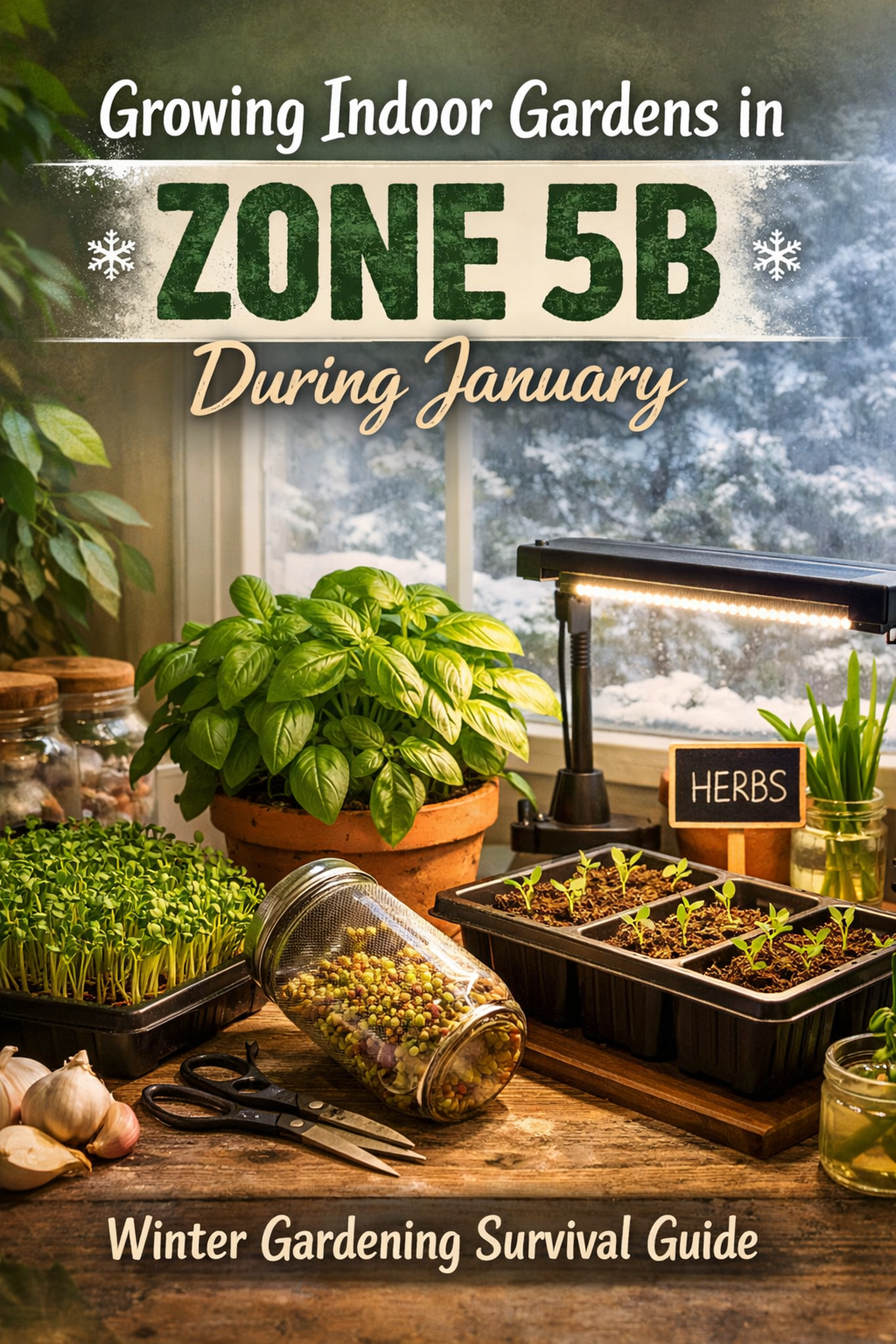
- Microgreens (radish, broccoli, sunflower, pea shoots) — fast, easy, and harvestable in 7–14 days.
- Sprouts (alfalfa, lentil, mung bean) — no soil, no lights… just rinse, drain, and eat.
- Cut-and-come-again greens (lettuce, spinach, arugula, baby kale) — perfect for small trays under a simple grow light.
- Herbs (basil, parsley, cilantro, chives, thyme, oregano, mint) — fresh flavor all winter long.
- Green onions / scallions — regrow them from kitchen scraps in water, then pot them up.
- Garlic greens — plant a clove, snip the tops, and use them like green onions.
- Seed starting trays — January is prime time to start onions, peppers, herbs, and brassicas for spring.
- Propagation jars — basil, rosemary, and other cuttings = free plants.
MTGG rule of thumb: If you can harvest something from it in 2–21 days, it’s perfect for January.
Two Simple Indoor Setups (Pick Your Lane)
Most people get stuck because they think indoor gardening has to be complicated. It doesn’t. Pick one of these and run it:
No Grow Light Setup (Zero Fancy Stuff)
- Sprouts: jar method (rinse + drain, repeat)
- Kitchen scrap regrow: green onions in water, then pot them
- Herbs: bright window (south-facing is best)
Basic Grow Light Setup (Biggest Winter Upgrade)
- Microgreens tray (quick harvests)
- Salad tray (cut-and-come-again greens)
- Seed starting (get ahead for spring)
Light Reality Check (January Sun Is Weak)
In January, the sun is low, days are short, and cloudy weeks happen. A lot of “my plant is dying” is really just “my plant is starving for light.”
- If your plants are stretching and getting leggy… they need more light.
- If growth is painfully slow… they probably need more light.
- If you’re serious about indoor food… a basic grow light + timer is the cheat code.
Quick win: set a timer for 12–14 hours/day and let the light do the work for you.
Choosing the Right Location
Your goal is bright light and stable conditions. Most homes have a couple “good plant spots” and a bunch of “looks good but kills plants” spots.
- Best window: south-facing if you’ve got it
- Best light type: bright, indirect light for most plants
- Best indoor station: a shelf/table where you can keep trays organized
Temperature Control (Avoid Drafts + Heat Vents)
Most indoor growers like a steady range around 60–75°F. What they don’t like is bouncing between “freezing draft” and “blast furnace vent.”
- Don’t put plants right against drafty windows/doors
- Don’t put trays directly over vents
- Stable temps = happier plants
Humidity (Winter Air Is Dry)
Winter air indoors is dry, and plants feel it. If you’re doing herbs and greens, you can usually get by… but if you’re growing anything tropical or you see crispy edges, bump humidity.
- Humidifier: easiest option
- Pebble tray: add water + pebbles near plants (not drowning the pot)
- Group plants: they create a little humid zone together
Watering (Don’t Love Your Plants to Death)
Overwatering is the #1 indoor winter mistake. Evaporation is slower in January, so soil stays wet longer.
- Check first: finger test 1 inch down
- Water slowly: soak thoroughly when it’s time
- Drain: don’t let trays/pots sit in water
If you’re not sure… wait one more day. Winter watering is all about patience.
Fertilizing (Light Feed Only)
Most indoor plants and greens don’t need heavy feeding in January. If you do feed, go light and steady.
- Use a balanced fertilizer
- Go half-strength
- Every 4–6 weeks is plenty for most houseplants
- For microgreens: you can usually skip fertilizer (they’re living off the seed)
Pest Management (Winter Is Sneaky)
Dry air + warm homes can invite pests. The key is catching them early.
- Weekly check: look under leaves
- Isolate fast: don’t let one plant become a whole-house problem
- Wipe + treat: a damp cloth plus plant-safe treatment goes a long way
Quick Boxes
January Indoor Food Plan ✅
Fast harvests in 7–14 days. Perfect winter momentum.
No lights needed. Rinse + drain and you’re eating in days.
Fresh flavor all winter. Window or grow light = win.
Get ahead for spring with onions, peppers, herbs, brassicas.