February is sneaky. It feels like nothing's happening outside — but if you're a gardener, this is actually one of the most important months of the year. What you start now determines what you'll be harvesting in May, June, and beyond.
The trick? Knowing your USDA hardiness zone so you're not starting too early or too late. This is your zone-by-zone cheat sheet for February planting.
Know Your USDA Zone First
Before you plant anything, figure out your zone. Your USDA hardiness zone tells you your average last frost date — and that's what drives your entire seed-starting schedule.
Here's the quick breakdown:
- Cold zones (3–5): Last frost mid-May to early June
- Cool zones (6–7): Last frost mid-April to mid-May
- Mild zones (8–10): Last frost February to mid-March (or no frost at all)
Not sure what zone you're in? Use the USDA Plant Hardiness Zone Map to look it up by zip code.
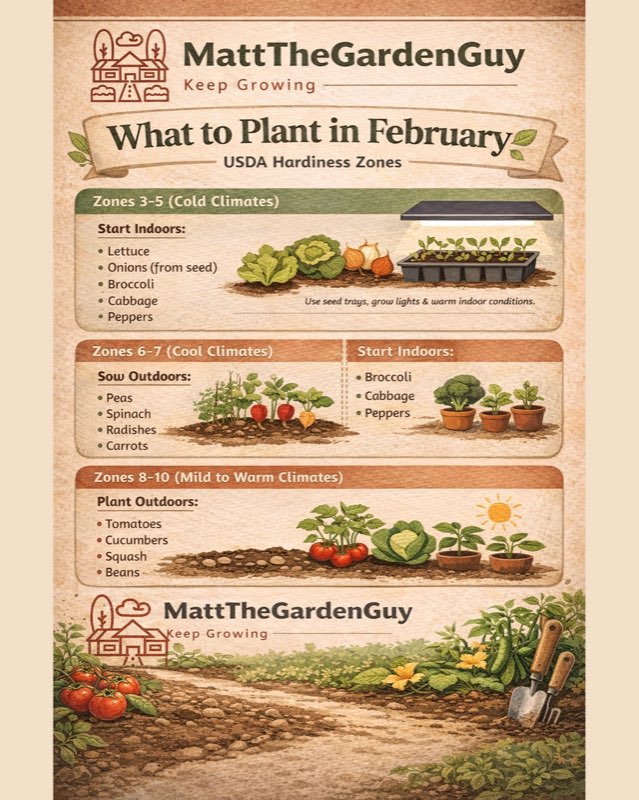
Cold Zones (3–5): Indoor Starts Only
It's still deep winter outside. Snow on the ground, frozen soil — you're not planting anything outdoors yet. But indoors? You've got work to do.
Start These Indoors in February
- Onions (from seed): These are slow growers. Start them now so they're ready to transplant after last frost.
- Leeks: Same deal as onions — they need a long head start indoors.
- Celery: Another slow one. Tiny seeds, so surface sow and keep moist.
- Herbs (parsley, chives): Parsley is notoriously slow to germinate. Get it going now.
- Brassicas (broccoli, cabbage, cauliflower): Start late February for transplanting in spring.
Zone 3–5 rule: If it's not under a grow light indoors, it's not happening yet. Be patient.
Cool Zones (6–7): Indoor + Early Outdoor
You've got a bit more flexibility here. February is prime time for indoor seed starting, and by late February you might be able to sneak a few cold-hardy things outside.
Start These Indoors
- Tomatoes: Start 6–8 weeks before your last frost date. For most Zone 6–7 gardeners, late February is the sweet spot.
- Peppers: These are slow. Start them now — they need warmth to germinate.
- Eggplant: Same timing as peppers. Warm soil and patience.
- Broccoli & cabbage: Start indoors for early spring transplanting.
- Herbs (basil, parsley, cilantro): Basil needs warmth; parsley needs time.
Direct Sow Outdoors (Late February, If Soil Is Workable)
- Spinach: Cold-hardy champ. Can handle light frost.
- Peas: Get them in the ground as soon as soil can be worked.
- Radishes: Fast growers that love cool weather.
Mild Zones (8–10): Full Speed Ahead
February in mild zones is basically early spring. You can be planting indoors AND outdoors — and if you're not, you're already behind.
Start These Indoors
- Tomatoes: Get them going under lights now for transplanting in March/April.
- Peppers & eggplant: Start early for a long, productive season.
- Basil: Needs warmth to germinate — start indoors and transplant later.
Plant These Outdoors
- Leafy greens (lettuce, spinach, kale, arugula): Direct sow now. They love cool weather.
- Root vegetables (carrots, beets, turnips, radishes): Get them in the ground.
- Peas: Plant as soon as soil is workable.
- Potatoes: Cut and cure seed potatoes, then plant.
- Onion sets: Push them into the ground now for summer harvest.
Seed Starting Tips for February
No matter what zone you're in, here are the basics that make or break your seed starting:
- Light is everything: A sunny window usually isn't enough. Use a grow light 12–16 hours a day, positioned 2–4 inches above seedlings.
- Warmth matters for germination: Most seeds germinate best at 65–80°F. A heat mat helps a lot, especially for peppers and tomatoes.
- Don't drown them: Keep soil moist, not soaked. Overwatering causes damping off (seedlings fall over and die).
- Pot up when ready: Once seedlings have their first true leaves, move them to bigger containers so roots can grow.
- Harden off before transplanting: Don't go straight from indoors to the garden. Gradually expose seedlings to outdoor conditions over 7–10 days.
Common February Mistakes
- Starting too early: If your last frost is late May, starting tomatoes in January means leggy, root-bound plants by transplant time. Count backwards from your frost date.
- Not labeling: You will forget what you planted. Label everything. Use tape, popsicle sticks, whatever — just do it.
- Weak light: Leggy, pale seedlings = not enough light. Get a grow light. It doesn't have to be expensive.
- Planting outside too soon: Just because it's 60°F one day doesn't mean frost is done. Trust your zone's last frost date, not the weather this week.
Quick Boxes
February Indoor Starts 🌱
What to get going under lights this month.
Onions, leeks, celery — they need the longest head start.
Tomatoes, peppers, eggplant — start 6–8 weeks before last frost.
Broccoli, cabbage, cauliflower — start late Feb for spring transplant.
Seriously. You will forget. Tape + marker on every tray.
Frequently Asked Questions
Can I plant tomatoes outside in February?
Only if you're in Zone 9–10 and your last frost has already passed. For everyone else, tomatoes go under grow lights indoors in February and don't go outside until well after your last frost date.
What if my zone is warmer than usual this year?
A warm February doesn't mean frost is done. Stick to your zone's average last frost date for seed starting timing. One surprise frost can kill tender seedlings. If you want to push it, use row covers or cold frames for protection.
What's the #1 thing I should start in February?
Onions (from seed). They're the slowest growers and need the longest head start. If you only start one thing this month, make it onions.
When should I start seeds indoors?
Count backwards from your last frost date. Most warm-season crops (tomatoes, peppers) need 6–8 weeks indoors. Slow growers (onions, leeks, celery) need 10–12 weeks. Your zone determines the timeline.